
Due to personal reasons, I am closing my practice effective July 1, 2016.
Till then, I am only seeing existing clients; I will not be taking any new
clients, no discounts, no referrals.

Imagine, for a moment a healing modality that, in less than 10 years, has become a highly valued method of those in the healing professions.
A modality that:
- needs no surgery, no drugs,
- is rapid, gentle
- is easy to learn
- gets measurable results over 80% of the time
Impossible? Read on....
- EFT belongs to a new class of treatments known as Energy Medicine. Of all the new approaches that use the body's energy system, experts who write about this subject, note that EFT is the most effective.
- EFT is a form of psychological acupressure that uses a simple, gentle tapping technique instead of needles to stimulate traditional Chinese acupoints. The tapping on specific points on the face, torso and hands is combined with verbalizing about the identified problem, followed by an affirmation phrase. Tapping on points and verbalizing on the issue you want to address can initiate a cascade of healthy neurological, chemical, emotional, cognitive and physical effects.
The result?
A RAPID REDUCTION IN THE SEVERITY OF YOUR PROBLEM.
How Does EFT Work?
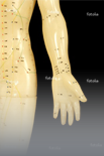
- EFT uses the body's energy meridians. The meridian system is a grid of energy pathways that run throughout the body. Stimulating points on these meridians has been an effective healing modality for thousands of years, most commonly known today as acupuncture.
- Research indicates that when acupoints along the meridians are stimulated, the limbic portion of the brain is also stimulated. When the limbic system of the brain is stimulated by biochemicals created by thought or memory, we respond by feeling emotions. If the thought or memory is negative or unhealthy, we will feel negative or unhealthy emotions, such as anxiety, fear, depression, anger, or addictive desires. But, if we stimulate EFT acupoints, we can lower the stimulation of the limbic system. With this lowering of the limbic system stimulation, the result will be a reduction or elimination of the negative or unhealthy emotions and behaviors.
Why EFT?
- At the end of the day are you fatigued?
- Do you have chronic pain or illness?
- Are you dealing with anger that you can't quite manage?
- Having trouble getting to that place of peace, calm and appreciation?
- Are you caught in a pattern of unhealthy behaviors and can't change?
- Could your life be more crazy or overwhelming?
YOU ARE NOT ALONE!

- The American Institute of Stress estimates that 75-90% of all visits to primary care physicians are for stress related problems
- According to the National Institutes of Health, as many as 1 in 5 Americans have symptoms of irritable bowel syndromes
- More than 26 million Americans between the ages of 20 and 64 experience frequent back pain
- Nearly 1 in 5 adults has arthritis
- According to data from the National Health and Nutrition Examination Survey completed in 2004, two-thirds of U.S. adults are overweight
- A National Sleep Foundation poll reports that 67% of American women surveyed said they had trouble sleeping
- The above statistics come from The National Institute for the Clinical Application of Behavioral Medicine: www.nicabm.com
- Change is hard. Beliefs, thoughts and behaviors often continue as if they have a life of their own. But EFT has solutions.
With EFT you will be able to:
- understand and release sabotaging behavior
- learn how to get dramatic pain relief
- learn tools for overcoming food cravings
- improve your health by eliminating negative emotions
- I have helped hundreds of people with EFT to eliminate a broad range of issues. And I have confidence that I can help you get the results you are looking for! (telephone coaching sessions)
heal......................change................................create
What People are SayingAbout Rosemary's EFT Skills and Experience
| This was my first session of any type dealing with the grief in my life over my brother's death. Rosemary was able to touch on several points that I had never thought of and helped me to start thinking of how I feel and why, and perhaps why the grief feels so strong and fresh all of the time. The session brought me in touch with things I had not thought about, things that I did not give myself credit for. I felt better for having the session and know that it will take more than just once to start a strong healing process. I am glad it was something I did for myself, it has started my journey, and I thank Rosemary for that. Phil S. |
|
"After a car accident, I was referred to Rosemary because I was afraid to drive. The EFT completely removed my fear of driving." M.M., So. Lake Tahoe. CA |
"I had Rosemary do EFT on myself and my son. I had immediate effects and noticed immediate behavioral changes in my son. When EFT was done on me, the issues at hand seemed so much easier to deal with. My perspective changed right away. After working on my son, my husband and I noticed some behavioral issues changing. Rosemary made it a game and my son continues to find it fun." H.B., South Lake Tahoe, CA |
|
"After several sessions of tapping, focusing on the dynamic of my interactions with my father, it came to me that I should "lead from the heart." My father is 93, has mild dementia and has become increasingly more difficult and confused. After EFT, dad became agreeable and almost like his old self. I don't know who has changed more - dad or me." V.G., South Lake Tahoe, CA |
"The results are dramatic. Rosemary provides a warm and accepting atmosphere where one feels safe going where Bonnie Raitt says, 'it's tangled and dark' and then facilitates a remarkable release by simply tapping. Unpleasant events and memories just aren't an issue anymore." L.M., Zephyr Cove, NV |
EFT Research
|
"Energy Psychology Treatment for Posttraumatic Stress in Genocide Survivors in a Rwandan Orphanage" Energy Psychology Journal Vol. 1, No. 1, November 2009 http://energypsychologyjournal.org/?p=82 "Efficacy of EFT in Reducing Public Speaking Anxiety: A Randomized Controlled Trial" Energy Psychology Journal Vol. 3, No. 1, May 2011 http://energypsychologyjournal.org/?page_id=297 "Psychological and Physiological Symptoms of Psoriasis After Group EFT Treatment: A Pilot Study" Energy Psychology Journal Vol. 3, No. 2, November 2011 http://energypsychologyjournal.org/?page_id=322 |
"Reducing Anxiety in Dental Patients Using Emotional Freedom Techniques" Energy Psychology Journal Vol. 3, No. 2, November 2011 http://energypsychologyjournal.org/?page_id=327 "Evaluation of a meridan-based intervention, Emotional Freedom Techniques(EFT)for reducing specific phobias of small animals" Journal of Clinical Psychology Vol. 59, No. 9 (Sept. 2003) pp.943-966 http://onlinelibrary.wiley.com/doi/10.1002/ jclp.10189/abstract "The Effect of Progressive Muscular Relaxation and Emotional Freedom Techniques on Test Anxiety in High School Students: A Randomized Controlled Trial" Energy Psychology Journal Vol. 1, No. 1, November 2009 http://energypsychologyjournal.org |
"Assessment of the Emotional Freedom Technique: An Alternative Treatment for Fear" The Scientific Review of Mental Health Practice, Vol. 2, No. 1, 2003 http://www.srmhp.org/0201/emotional-freedom-technique.html
|
"Psychological Symptom Change in Veterans After six Sessions of Emotional Freedom Techniques (EFT): An Observational Study" 2009 http://www.patclass.com/Marshall%20Published.pdf "Self-administered EFT (Emotional Freedom Techniques) in Individuals with Fibromyalgia: A Randomized Trial" Integrative Medicine: A Clinician's Journal August-September, 2008 http://www.eft-benesch.de/studien_abstracts/ brattberg.php |